
 EN
EN

Distributing baby gift bags represents a strategic marketing investment that extends far beyond simple promotional giveaways. For businesses targeting expectant parents, new mothers, and family-oriented consumers, these carefully curated packages deliver measurable returns across multiple dimensions—from customer acquisition costs to lifetime value metrics. Understanding the return on investment advantages of baby gift bags requires examining both immediate conversion impacts and long-term brand equity building, particularly in markets where emotional connection and trust form the foundation of purchasing decisions. The financial benefits manifest through reduced customer acquisition expenses, enhanced brand recall, accelerated purchase cycles, and the creation of organic advocacy networks that amplify marketing reach without proportional budget increases.
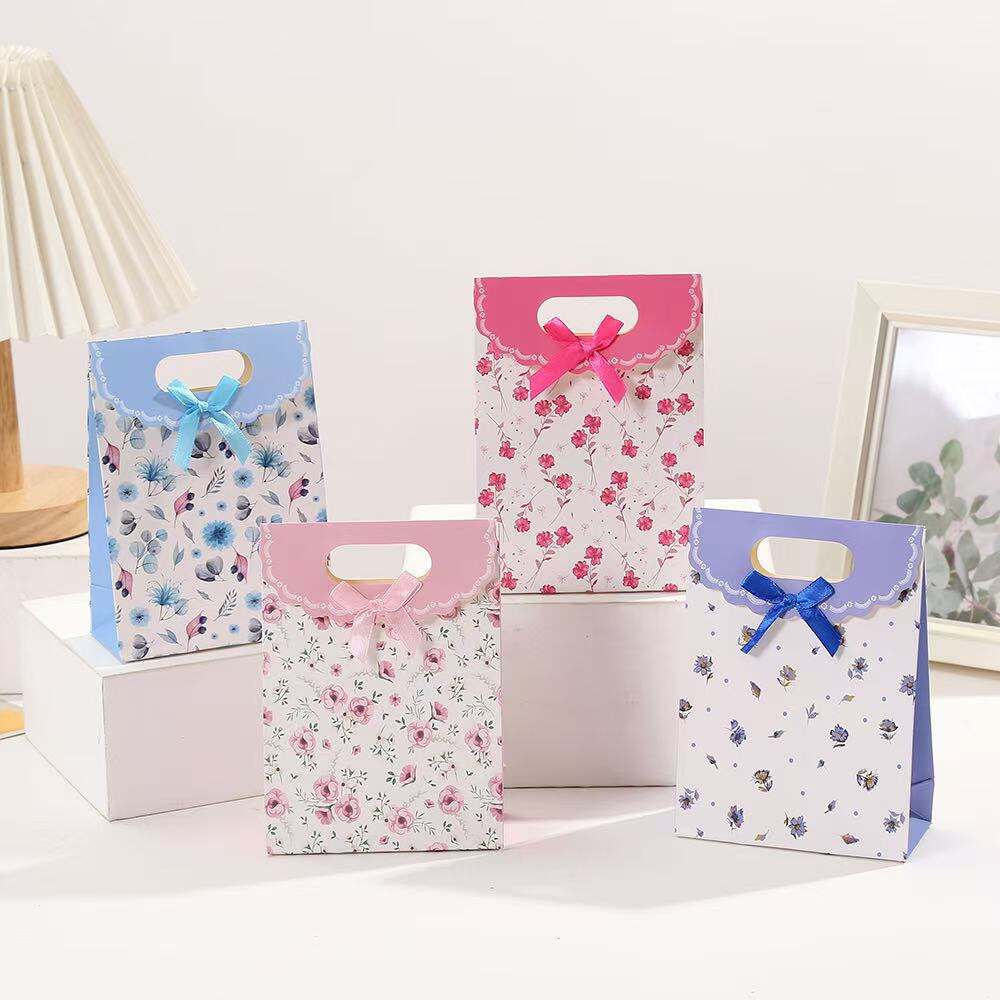
The economic logic behind baby gift bags centers on a fundamental marketing principle: reaching consumers during high-value life transitions produces disproportionate returns compared to general market outreach. New and expectant parents actively seek product solutions during a compressed decision window, making them exceptionally receptive to brand introductions that arrive with genuine utility and thoughtful presentation. When businesses distribute baby gift bags through strategic channels—hospitals, prenatal classes, pediatric offices, or maternity retail partnerships—they capture attention during moments of heightened need and reduced brand loyalty, creating opportunities for first-mover advantage in household purchasing patterns that often persist for years. The ROI calculation must therefore account not only for immediate conversions but also for the establishment of preferred vendor status during a life stage characterized by substantial ongoing expenditure across multiple product categories.
Customer Acquisition Cost Reduction Through Targeted Distribution
Precision Targeting Versus Broad-Spectrum Advertising
Traditional advertising channels require substantial investment to reach expectant parents within general population audiences, resulting in high waste ratios and elevated cost-per-acquisition metrics. Baby gift bags distributed through maternity-focused channels eliminate this inefficiency by concentrating resources exclusively on verified prospects. When a business places baby gift bags in hospital maternity wings, birthing centers, or obstetrician offices, every distribution reaches a confirmed member of the target demographic at the precise moment of maximum relevance. This precision reduces customer acquisition costs by factors ranging from three to seven times compared to equivalent reach through digital advertising, direct mail, or mass media campaigns. The mathematical advantage becomes particularly pronounced when calculating cost-per-engaged-customer rather than mere impressions, as baby gift bags generate physical interaction and extended exposure time that passive advertising cannot match.
Extended Engagement Duration and Message Retention
Unlike advertisements that compete for fractional attention spans, baby gift bags create extended engagement periods measured in hours rather than seconds. Recipients unpack contents deliberately, examine included products, read informational materials, and frequently share experiences with partners and family members. This extended interaction time translates directly into superior message retention and brand recall, fundamental prerequisites for conversion that justify the per-unit cost of baby gift bags when compared against the aggregate spending required to achieve equivalent recall through repetitive advertising exposure. Research in consumer behavior demonstrates that tactile interaction with branded materials produces memory encoding significantly stronger than visual or auditory advertising alone, suggesting that the cognitive impact of receiving and handling baby gift bags creates neurological advantages that persist through subsequent purchasing decisions. The ROI advantage emerges from achieving deep brand imprinting through single touchpoints rather than requiring multiple expensive exposures to build comparable recognition.
Measurable Conversion Tracking and Attribution Clarity
Baby gift bags enable conversion tracking mechanisms that provide attribution clarity often absent in multi-channel marketing campaigns. By including unique promotional codes, QR-linked landing pages, or specific product samples within baby gift bags, businesses establish direct measurement pathways linking distribution investments to subsequent purchases. This attribution precision allows accurate ROI calculation and iterative optimization impossible with awareness-focused advertising where conversion pathways remain ambiguous. Distribution partners can provide demographic data about recipient populations, enabling cohort analysis that refines targeting strategies and improves return ratios over successive campaigns. The operational advantage of measurable attribution extends beyond initial campaign assessment to inform product development, inventory planning, and customer service resource allocation based on empirically validated customer profiles rather than assumed market segments. For budget-conscious marketing departments, this analytical capability transforms baby gift bags from speculative brand-building exercises into data-generating assets that continuously improve marketing efficiency.
Lifetime Value Enhancement Through Early Brand Relationship Establishment
Capturing Share of Wallet During High-Expenditure Life Stages
The birth of a child triggers one of life's most significant increases in household expenditure, with families spending thousands annually on products ranging from feeding supplies to nursery furniture, clothing, safety equipment, and health products. Baby gift bags that introduce brands during this expenditure surge position companies to capture disproportionate wallet share before competitive alternatives establish preference. The lifetime value advantage materializes because early positive experiences create default purchasing patterns that persist through subsequent children and extend into related product categories as children age. When businesses include samples, educational content, or introductory offers in baby gift bags, they effectively purchase early-stage relationship access at costs substantially lower than the cumulative marketing investment required to convert established users of competitive products. The ROI calculation must therefore incorporate multi-year customer value projections rather than limiting analysis to immediate conversion metrics, recognizing that initial distribution costs represent customer relationship acquisition expenses amortized across extended purchasing timelines.
Trust Transfer and Credibility Enhancement Through Strategic Partnerships
When baby gift bags reach recipients through trusted institutional channels—hospitals, pediatric practices, or established parenting organizations—they inherit credibility that dramatically reduces the skepticism barriers confronting direct marketing approaches. This trust transfer accelerates conversion cycles and increases acceptance rates for included offers because recipients perceive institutional endorsement even when distributions represent commercial partnerships rather than clinical recommendations. The psychological mechanism operates similarly to professional referrals, where source authority confers legitimacy on introduced options. For businesses, this credibility enhancement represents substantial value creation because establishing equivalent trust levels through isolated marketing efforts requires extensive time investments and repeated positive interactions. The ROI advantage emerges from compressed trust-building timelines that enable faster progression through consideration and purchase stages, reducing the extended nurture sequences typical in cold audience conversion funnels. Distribution partnerships that provide access to these trust-enhanced channels therefore justify premium costs through superior conversion efficiency and reduced sales cycle duration.
Emotional Connection Formation During Vulnerable Life Moments
New parents experience heightened emotional states characterized by protective instincts, information-seeking behavior, and gratitude toward helpful resources. Baby gift bags received during these vulnerable moments create emotional associations that transcend rational product evaluation, forming affective bonds that influence purchasing decisions through mechanisms distinct from feature-benefit analysis. This emotional connection generates customer loyalty that resists price competition and produces advocacy behaviors where satisfied recipients actively recommend brands to peers within their expanding parent networks. The lifetime value enhancement stems from both direct repeat purchases and indirect acquisition of referred customers who arrive pre-disposed toward positive brand perception. Quantifying this emotional equity remains challenging, yet customer retention analyses consistently demonstrate that emotionally-engaged customers exhibit repurchase rates and average order values significantly exceeding transactionally-motivated buyers. Baby gift bags that acknowledge the significance of the parenting transition and provide genuinely useful resources rather than purely promotional content maximize this emotional connection potential, generating ROI advantages that compound over customer relationship durations.
Organic Advocacy Amplification and Viral Coefficient Enhancement
Social Sharing Behavior Among Parent Communities
Contemporary parent culture exhibits strong propensities toward social sharing of experiences, product discoveries, and resource recommendations across digital and physical networks. Baby gift bags designed with shareability considerations—visually appealing packaging, Instagram-worthy presentation, or novel product inclusions—trigger voluntary content creation that extends brand reach without additional marketing expenditure. When recipients photograph and share baby gift bags on social platforms, tag participating brands, or discuss contents in parenting forums, they generate impressions that carry peer endorsement value substantially exceeding paid advertising credibility. The viral coefficient measures how many additional prospects each customer acquisition generates through referral behavior, and baby gift bags distributed to socially-active parent demographics can achieve coefficients exceeding 1.5, meaning each distribution yields awareness among multiple additional qualified prospects. This organic amplification produces exponential rather than linear returns on distribution investments, creating ROI advantages that grow over campaign durations as sharing behaviors accumulate reach across interconnected social networks.
Word-of-Mouth Generation Within High-Trust Peer Networks
Beyond digital sharing, baby gift bags stimulate word-of-mouth recommendations within the physical parent networks that form around birthing classes, playgroups, pediatric waiting rooms, and family gatherings. These face-to-face recommendations carry exceptional conversion power because they occur within high-trust relationships where advice-seeking represents genuine information needs rather than casual browsing. Recipients who receive valuable baby gift bags naturally mention experiences during parenting conversations, effectively serving as unpaid brand ambassadors within precisely targeted prospect pools. The economic advantage emerges because these peer recommendations reach consumers during active consideration phases when receptivity to suggestions peaks, producing conversion rates that dwarf cold outreach effectiveness. Marketing analysts estimate that peer recommendations generate customer acquisition costs approximately one-tenth those of conventional advertising when measuring fully-loaded expenses including creative development, media placement, and campaign management. Baby gift bags that exceed recipient expectations through thoughtful curation or unexpected value maximize recommendation likelihood, transforming distribution investments into sustainable referral engines that continue generating returns long after initial campaign conclusions.
Content Generation and User-Generated Marketing Assets
Sophisticated baby gift bags generate user-created content that businesses can repurpose across owned marketing channels, effectively converting distribution costs into content production investments. When recipients share unboxing experiences, product reviews, or usage testimonials, they create authentic marketing materials that resonate with prospective customers more effectively than corporate messaging. Businesses can aggregate this user-generated content into social proof libraries, testimonial collections, or case study repositories that reduce future content development expenses while increasing message credibility. The ROI calculation should account for avoided content creation costs and enhanced conversion rates when authentic user content replaces or supplements professional marketing materials. Additionally, user-generated content provides continuous market research insights revealing how actual customers perceive and utilize products, informing product development and positioning refinements that improve overall business performance. Baby gift bags distributed with explicit encouragement for sharing experiences—through hashtag campaigns, photo contests, or review incentives—maximize this content generation potential, creating compounding value where single distribution investments yield multiple derivative assets supporting extended marketing objectives.
Competitive Positioning and Market Entry Acceleration
First-Mover Advantage in Household Brand Establishment
Parents establishing new households for expanding families exhibit reduced brand loyalty compared to established purchasing patterns, creating windows of opportunity for market entry that baby gift bags exploit effectively. When a brand reaches new parents before competitors establish presence, it gains first-mover advantages where initial positive experiences create default preferences that competitors must actively disrupt rather than simply match. This positioning advantage produces sustained market share gains because cognitive biases favor familiar options and switching costs—psychological rather than financial—discourage experimentation once satisfactory solutions exist. The ROI benefit emerges through reduced competitive pressure on margins, as established preferred vendors face less price-based competition than undifferentiated alternatives. Baby gift bags that introduce superior products or demonstrate clear value propositions during these open consideration windows can establish market positions that persist throughout parenting lifecycles, generating returns that far exceed initial distribution investments through accumulated sales over multi-year customer relationships.
Rapid Market Penetration for New Product Launches
For businesses introducing new products into established categories, baby gift bags provide accelerated market penetration mechanisms that compress adoption timelines. Traditional product launches require extensive awareness-building campaigns before achieving meaningful trial rates, but baby gift bags place products directly into consumer hands, eliminating awareness and trial barriers simultaneously. This acceleration reduces the time-to-profitability for new products and decreases the risk exposure associated with launch investments. When new parents receive innovative products through baby gift bags, they evaluate offerings without the skepticism that accompanies commercial claims, increasing adoption likelihood for novel solutions that might face resistance in conventional retail environments. The strategic value extends beyond immediate sales to include market validation and feedback generation that informs production scaling and distribution expansion decisions. Companies launching premium or differentiated baby products can use gift bag distribution to demonstrate value propositions that specification sheets cannot convey, overcoming the communication limitations that frequently impede innovative product adoption.
Geographic Market Development and Channel Relationship Building
Baby gift bags facilitate geographic market entry by establishing distribution partnerships with institutions that provide ongoing channel access beyond initial campaigns. When businesses develop relationships with hospital networks, pediatric practice groups, or regional parenting organizations to distribute baby gift bags, they create pathways for sustained market presence and future product introductions. These institutional relationships represent strategic assets with value exceeding single campaign returns, as they provide renewable access to continuously refreshing prospect populations. The ROI advantage includes avoided costs of establishing distribution networks through conventional retail channel development, which typically requires significant trade spending, slotting fees, and promotional support. For businesses expanding into new geographic markets, baby gift bags distributed through established institutional partners provide immediate market visibility and consumer access that would require months or years to achieve through retail channel development. This market entry acceleration compresses payback periods and reduces the capital requirements for geographic expansion, improving overall return on growth investments.
Operational Efficiency and Marketing Budget Optimization
Consolidated Multi-Channel Impact Through Single Distribution Vehicle
Baby gift bags function as integrated marketing vehicles that simultaneously achieve multiple campaign objectives traditionally requiring separate budget allocations. A single thoughtfully designed package delivers brand awareness, generates product trial, provides educational content, captures customer data, and stimulates purchase behavior—outcomes that would otherwise necessitate distinct awareness campaigns, sampling programs, content marketing initiatives, lead generation activities, and conversion advertising. This consolidation produces significant operational efficiencies by reducing campaign management overhead, creative development redundancy, and coordination complexity across multiple vendors and platforms. The ROI advantage emerges from achieving comprehensive marketing coverage at costs substantially below the aggregate spending required for functionally equivalent separate campaigns. Marketing teams report that baby gift bags reduce overall customer acquisition costs by twenty to forty percent compared to conventional multi-channel approaches when properly executed, primarily through elimination of duplicative expenses and improved resource allocation efficiency.
Inventory Management and Sample Distribution Optimization
For product manufacturers, baby gift bags provide efficient channels for sample distribution that serve dual purposes of marketing and inventory management. Slow-moving inventory, seasonal overstock, or discontinued packaging variants can be incorporated into baby gift bags, converting potential write-offs into marketing assets that generate consumer exposure and potential full-price purchases. This operational benefit improves overall business economics beyond direct marketing ROI by reducing waste disposal costs and recovering partial value from inventory that would otherwise represent complete losses. The practice requires careful curation to ensure baby gift bags maintain perceived value rather than appearing as clearance dumping, but when executed appropriately, it transforms inventory management challenges into marketing opportunities. Additionally, manufacturers can use baby gift bags to test market response to potential new products or packaging designs, generating valuable consumer feedback before committing to full production runs, thereby reducing new product development risks and improving innovation success rates.
Performance Data Collection for Continuous Improvement
Baby gift bags equipped with tracking mechanisms generate performance data that enables continuous campaign optimization and improves marketing efficiency over successive iterations. By analyzing redemption rates for included offers, traffic patterns to campaign-specific landing pages, or sales conversions linked to distribution cohorts, businesses identify which baby gift bags components, distribution channels, and timing strategies produce superior returns. This empirical learning process creates compounding ROI improvements as insights from each campaign inform refinements that enhance subsequent distribution effectiveness. The analytical capability transforms baby gift bags from static marketing tactics into dynamic learning systems that continuously improve resource allocation efficiency. Organizations that implement systematic testing protocols—varying bag contents, partner selection, or recipient targeting criteria across distribution batches—accelerate learning curves and achieve optimization plateaus faster than competitors relying on intuitive rather than data-driven decision making. The long-term ROI advantage emerges from cumulative efficiency gains that separate sophisticated practitioners from organizations treating baby gift bags as undifferentiated promotional expenses.
FAQ
How quickly can we expect to see ROI from baby gift bags distribution?
Initial returns typically manifest within thirty to ninety days as recipients redeem included offers, visit promoted websites, or make first purchases, though the full ROI picture emerges over six to twelve months as lifetime value patterns become measurable. Immediate metrics like website traffic spikes, coupon redemption rates, and social media engagement appear within weeks of distribution, providing early performance indicators. However, the most significant ROI advantages—including repeat purchase behavior, referral generation, and brand preference establishment—develop over extended periods as customer relationships mature. Businesses should establish measurement frameworks that track both short-term activation metrics and long-term value indicators, recognizing that baby gift bags generate returns across multiple timeframes. Geographic and demographic variables influence ROI timelines, with urban markets and digitally-engaged populations typically showing faster initial responses compared to rural or less connected communities where word-of-mouth diffusion operates on longer cycles.
What distribution budget should we allocate to achieve meaningful ROI from baby gift bags?
Effective baby gift bags programs typically require minimum investments of fifteen to thirty dollars per unit including contents, packaging, and distribution logistics, with total campaign budgets depending on target market size and desired penetration rates. Markets with high birth rates may justify larger absolute investments despite potentially lower per-unit returns due to volume advantages, while premium product categories can support higher per-bag costs through superior conversion values. Rather than fixed budget rules, businesses should calculate target customer acquisition costs based on lifetime value projections and work backward to determine sustainable per-unit distribution investments. A practical starting point involves pilot programs distributing five hundred to one thousand baby gift bags through select channels while implementing rigorous tracking to establish baseline performance metrics, then scaling investment based on demonstrated returns. Organizations should resist underinvestment that produces substandard baby gift bags failing to generate recipient enthusiasm, as inadequate quality undermines the entire value proposition and wastes distribution opportunities with target audiences.
Can baby gift bags work for B2B companies or only consumer brands?
While baby gift bags primarily serve consumer brand objectives, B2B companies serving parent markets can achieve ROI advantages through strategic distribution targeting institutional decision-makers and professional influencers. Pediatric medical suppliers, childcare facility equipment providers, or family service technology platforms can distribute baby gift bags containing professional resources, case studies, and institutional trial offers to decision-makers within hospitals, daycare centers, or family support organizations. The mechanism shifts from direct consumer conversion to professional relationship development and institutional sales pipeline building, but the core advantage of targeted high-value prospect engagement during relevant decision windows remains applicable. B2B applications typically require different content strategies emphasizing professional credibility and institutional benefits rather than consumer emotional appeals, and success metrics focus on qualified lead generation and sales cycle acceleration rather than immediate transactional conversions. Organizations should assess whether their customer decision processes involve parenting life stage considerations and whether distribution channels exist that reach relevant professional audiences before investing in B2B-oriented baby gift bags programs.
How do we measure ROI beyond immediate sales conversions?
Comprehensive ROI measurement for baby gift bags requires tracking multiple value dimensions including brand awareness lift, customer lifetime value, referral generation rates, social media reach expansion, and content asset creation beyond immediate conversion metrics. Businesses should implement attribution systems linking baby gift bags recipients to subsequent purchases through unique identifiers, track cohort performance comparing recipients against control groups who did not receive distributions, and monitor referral patterns through customer source questions during checkout or registration processes. Brand awareness changes can be assessed through periodic surveys measuring aided and unaided recall among target demographics, while social listening tools quantify mention volume and sentiment across digital platforms. Advanced analytics might include marketing mix modeling that isolates baby gift bags contribution to overall sales patterns or customer journey analysis revealing touchpoint influence on conversion paths. The measurement framework should align with strategic objectives, whether emphasizing rapid customer acquisition, long-term relationship value, market position establishment, or marketing efficiency improvement, recognizing that different goals require different metrics and evaluation timeframes to accurately capture program performance and justify continued investment.
Table of Contents
- Customer Acquisition Cost Reduction Through Targeted Distribution
- Lifetime Value Enhancement Through Early Brand Relationship Establishment
- Organic Advocacy Amplification and Viral Coefficient Enhancement
- Competitive Positioning and Market Entry Acceleration
- Operational Efficiency and Marketing Budget Optimization
- FAQ