
 EN
EN
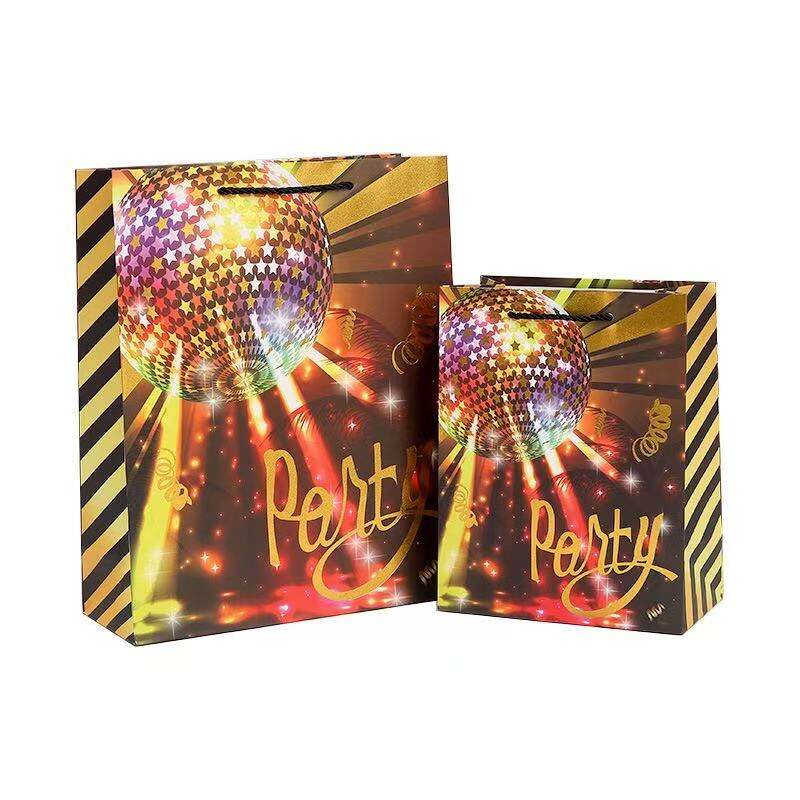
Selecting a professional baby gift bag for national tenders requires careful attention to procurement standards, quality expectations, and regulatory compliance frameworks that govern public sector acquisitions. National tender processes demand suppliers demonstrate exceptional product quality, transparent sourcing, and adherence to safety regulations that protect vulnerable populations like infants and new parents. Understanding the specific criteria evaluators use when assessing baby gift bag submissions helps manufacturers and distributors position their offerings competitively while ensuring every component meets or exceeds mandatory standards for infant-related products in institutional procurement contexts.
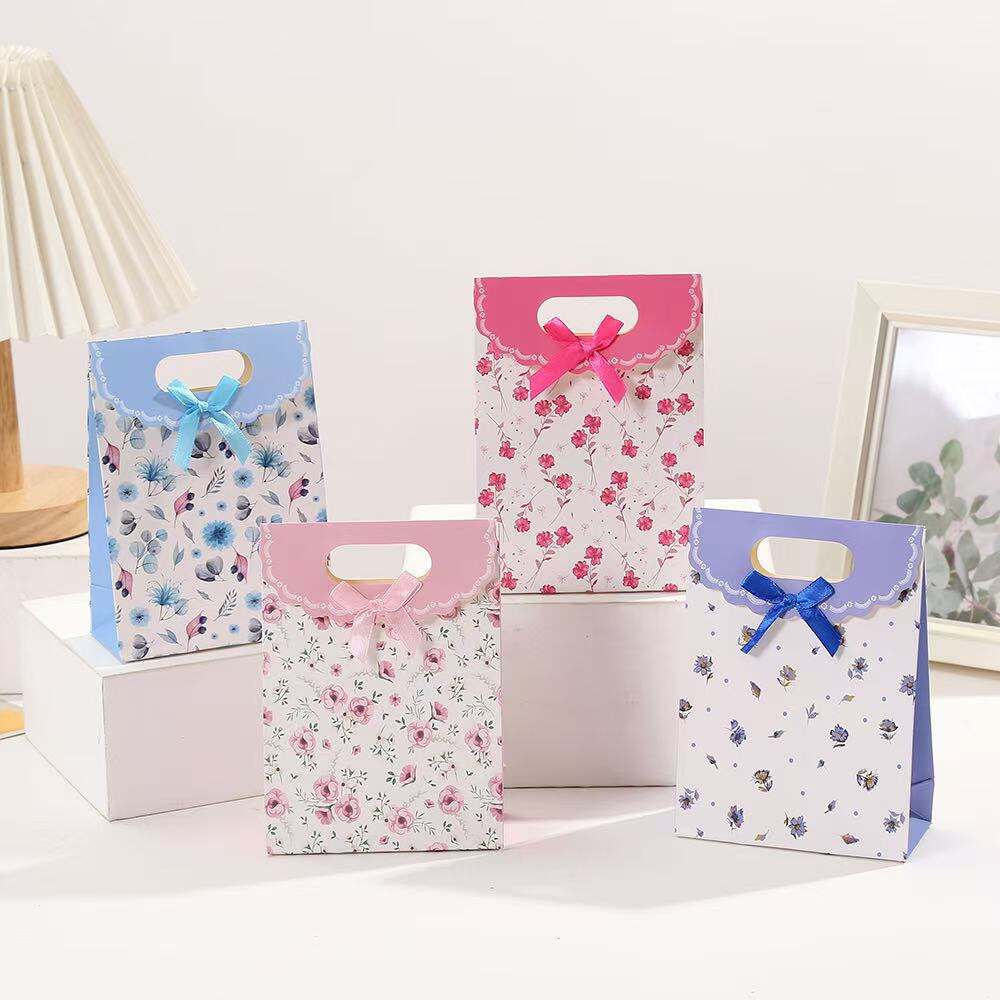
The competitive landscape of national tender submissions for baby gift bag programs centers on demonstrating measurable value, long-term durability, and alignment with public health objectives. Government institutions and healthcare facilities evaluate proposals based on multidimensional criteria including material safety certifications, structural integrity for repeated use, customization capabilities that reflect institutional branding, and cost-effectiveness across large-volume orders. Successfully navigating these requirements demands strategic preparation that balances technical specifications with presentation quality, ensuring your baby gift bag offering communicates professional excellence while addressing the practical needs of end users in hospital maternity wards, public health programs, and government family support initiatives.
Understanding National Tender Requirements for Baby Gift Bag Procurement
Regulatory Compliance Standards in Public Procurement
National tender processes for baby gift bag procurement operate within strict regulatory frameworks designed to ensure public funds generate maximum value while protecting infant safety. Government procurement offices typically mandate compliance with consumer product safety standards, requiring all materials used in baby gift bag construction meet established toxicity thresholds and chemical exposure limits. These standards apply not only to the bag itself but to any decorative elements, printing inks, handles, and structural reinforcements that might come into contact with infant products or be handled by new parents. Documentation proving compliance with relevant safety certifications becomes essential evidence in the technical evaluation phase of tender assessment.
Beyond basic safety requirements, national tender specifications often include environmental sustainability criteria that influence material selection for baby gift bag production. Public institutions increasingly prioritize suppliers demonstrating commitment to recyclable materials, reduced carbon footprints in manufacturing, and responsible sourcing practices that align with government sustainability goals. Your baby gift bag proposal must address these environmental considerations with specific evidence about material composition, manufacturing processes, and end-of-life disposal or recycling options. Evaluators examine whether your production methods reflect contemporary best practices in sustainable packaging while maintaining the durability and aesthetic appeal necessary for institutional gift-giving programs.
Technical Specifications and Quality Benchmarks
Tender documentation for baby gift bag procurement establishes precise technical specifications regarding dimensions, weight capacity, handle strength, and structural durability that proposals must address explicitly. Government evaluators assess whether submitted baby gift bag designs can withstand the handling demands of institutional distribution systems, including storage, transport, and eventual use by recipients who may reuse bags for various purposes beyond initial gift presentation. Technical proposals should include detailed specifications about material thickness, reinforcement techniques, base construction, and handle attachment methods that demonstrate engineering consideration for real-world performance under varied conditions.
Quality assurance protocols represent another critical dimension of technical evaluation in national tender processes. Procurement officers expect suppliers to outline comprehensive quality control measures applied throughout baby gift bag manufacturing, from raw material inspection through final product testing before delivery. Your tender submission should describe specific inspection checkpoints, defect rate tolerance levels, and remediation procedures that ensure consistent quality across large production runs. Evidence of ISO certifications, third-party quality audits, or established quality management systems strengthens your technical credibility and demonstrates institutional capacity to deliver reliable products at scale over potentially multi-year contract periods.
Budget Alignment and Cost Structure Transparency
Financial evaluation criteria in national tenders require baby gift bag proposals to demonstrate clear cost structures that align with allocated budget parameters while offering measurable value. Public procurement processes typically emphasize total cost of ownership rather than simply initial unit prices, meaning evaluators consider factors like durability that reduces replacement frequency, reusability that extends product lifecycle, and packaging efficiency that minimizes storage and distribution costs. Your pricing strategy should articulate how your baby gift bag offering delivers economic value across the complete procurement cycle, not merely at the point of purchase.
Transparent breakdown of cost components helps procurement committees understand the value proposition embedded in your baby gift bag pricing. Detailed cost structures that itemize material expenses, manufacturing overhead, customization charges, and delivery logistics demonstrate professional pricing practices and facilitate fair comparison among competing proposals. Government evaluators appreciate suppliers who provide clear explanations for premium features or quality enhancements that justify higher unit costs through superior performance, extended lifespan, or reduced maintenance requirements that generate savings over the contract duration.
Material Selection Criteria for Professional Baby Gift Bag Applications
Safety-Certified Materials for Infant Product Contact
Choosing appropriate materials for baby gift bag construction begins with understanding which substances may come into direct or indirect contact with infant products during storage and transport. Public health institutions require assurance that bag materials contain no harmful chemicals, heavy metals, or volatile organic compounds that could migrate onto baby clothing, blankets, or feeding accessories stored inside. Professional baby gift bag manufacturers maintain current certifications proving their materials meet or exceed safety thresholds established by consumer product safety authorities, providing documentary evidence that becomes essential supporting material in tender submissions.
Material selection also considers physical safety characteristics including tear resistance, edge finishing, and component security that prevent potential hazards. Government procurement specifications often require baby gift bag handles to withstand specific weight loads without separation, reinforced bases that prevent bottom failure under typical loading conditions, and smooth interior surfaces free from sharp edges or protruding elements. These physical safety requirements reflect institutional responsibility to distribute products that present no injury risk to new parents or infants, creating technical standards your material choices must demonstrably satisfy through testing documentation and engineering specifications included in tender proposals.
Durability and Reusability for Extended Lifecycle Value
National tender evaluators increasingly prioritize baby gift bag options that support multiple uses beyond initial gift presentation, recognizing that reusable designs deliver greater environmental and economic value than single-use alternatives. Material selection directly impacts reusability potential, with high-quality papers, reinforced textiles, or durable synthetic materials enabling bags to withstand repeated handling, storage, and transport cycles. Your tender proposal should articulate the expected lifecycle of your baby gift bag design under normal use conditions, supported by testing data that demonstrates material performance through simulated use cycles that replicate real-world handling patterns.
Durability considerations extend to aesthetic persistence, ensuring baby gift bag appearance remains presentable through multiple uses rather than showing premature wear that diminishes perceived value. Material choices that resist scuffing, maintain structural shape after repeated folding, and preserve printed graphics through handling and light exposure contribute to extended functional life. Government institutions appreciate suppliers who engineer baby gift bag products with sufficient quality to serve secondary purposes for recipients, transforming institutional gifts into practical household items that continue delivering value long after initial distribution while reinforcing positive associations with the sponsoring public health program or government initiative.
Customization Compatibility for Institutional Branding
Material selection must accommodate customization requirements that enable government institutions to incorporate official logos, program branding, health education messaging, and contact information onto baby gift bag surfaces. Different materials accept printing, embossing, foil stamping, or other decoration techniques with varying degrees of fidelity and permanence, influencing both aesthetic impact and information durability throughout the bag's functional life. Professional baby gift bag suppliers understand these compatibility considerations and select base materials that optimize customization results while maintaining safety standards and structural performance requirements established in tender specifications.
Customization capabilities also encompass color matching precision for institutional brand guidelines, reproduction quality for detailed logos or small text elements, and decoration permanence that resists fading or flaking through normal handling. Your tender submission should provide examples demonstrating customization quality achievable with your chosen baby gift bag materials, including color samples, logo reproduction specimens, and evidence of decoration durability through wear testing. Government procurement committees evaluate whether your customization approach will accurately represent institutional identity while maintaining professional appearance throughout the bag's expected lifecycle, making material-decoration compatibility a critical selection factor.
Design Features That Enhance Tender Competitiveness
Functional Design Elements for User Experience
Competitive baby gift bag designs incorporate functional features that enhance usability for both institutional distribution staff and recipient families. Handle design significantly impacts carrying comfort and load distribution, with wider, reinforced handles reducing hand pressure during transport of infant supplies. Government evaluators consider whether your baby gift bag design includes ergonomic features that facilitate comfortable carrying even when bags contain substantial weights, recognizing that institutional gift packages often include multiple items that collectively create significant loads requiring thoughtful handle engineering.
Interior organization features represent another functional design dimension that differentiates professional baby gift bag offerings in competitive tender evaluations. Some institutional programs value bags with internal pockets, dividers, or attachment points that help organize diverse infant care items included in welcome packages or family support kits. While maintaining clean, uncluttered aesthetic presentation, strategic design elements that enhance practical utility demonstrate supplier understanding of end-user needs and institutional distribution workflows. Your baby gift bag design should balance visual simplicity with functional intelligence that makes both packing and unpacking more efficient while protecting contents during handling and transport.
Aesthetic Presentation Aligned with Institutional Context
Visual presentation quality significantly influences tender evaluation outcomes, as government institutions select baby gift bag designs that reflect appropriate dignity and care in welcoming new families into public health programs or community support services. Professional appearance standards emphasize clean design aesthetics that avoid commercial advertising tones while maintaining visual warmth suitable for celebrating new births. Your baby gift bag design should communicate institutional credibility through refined typography, balanced compositional layout, and color schemes that align with healthcare environments or government program branding without appearing clinical or impersonal.
Cultural sensitivity in design represents an important consideration for national tender applications serving diverse populations. Baby gift bag aesthetics should employ inclusive imagery and messaging that resonates across different cultural communities while avoiding symbols or design elements that might inadvertently exclude or offend specific demographic groups. Government procurement committees appreciate suppliers who demonstrate awareness of cultural diversity considerations in design development, ensuring baby gift bag presentations communicate universal welcome and support rather than reflecting narrow cultural assumptions that might limit program effectiveness across heterogeneous populations served by national public health initiatives.
Scalability for Variable Production Volumes
National tender awards often involve substantial initial orders with potential for additional procurement over extended contract periods, requiring baby gift bag suppliers to demonstrate production capacity that accommodates both large-volume initial fulfillment and flexible response to supplemental orders. Your tender proposal should outline manufacturing capabilities including equipment capacity, production scheduling flexibility, and supply chain relationships that enable rapid scaling without compromising quality standards. Government procurement officers evaluate whether suppliers possess organizational depth to sustain performance throughout multi-year contracts that may involve evolving volume requirements based on program expansion or policy changes affecting distribution scope.
Quality consistency across production volumes represents a critical scalability consideration in tender evaluation. Procurement committees require assurance that baby gift bag quality remains uniform whether you manufacture small pilot batches or large-volume production runs, eliminating variation that could create recipient experience inconsistencies across different distribution periods or geographic regions. Your proposal should describe quality management systems that maintain specification compliance independent of production volume, including statistical process controls, batch testing protocols, and corrective action procedures that sustain excellence throughout varying order sizes and delivery schedules over potentially lengthy contract durations.
Documentation and Certification Requirements
Product Safety Testing and Compliance Evidence
Comprehensive documentation proving baby gift bag compliance with applicable safety standards forms an essential component of competitive tender submissions. Government procurement processes require suppliers to provide current laboratory testing reports verifying that all materials used in bag construction meet chemical safety limits, toxicity thresholds, and physical safety requirements established by relevant regulatory authorities. These testing reports must come from accredited third-party laboratories following standardized testing protocols, ensuring results credibility and comparability across competing proposals that procurement committees evaluate during technical assessment phases.
Beyond basic material safety testing, tender documentation should include comprehensive safety certifications covering the complete baby gift bag assembly including handles, reinforcements, printing inks, adhesives, and any decorative elements that comprise the finished product. Government evaluators examine whether safety assurance extends throughout the entire product system rather than applying only to primary materials, ensuring no component introduces unacceptable risk. Your tender submission should provide clear traceability from raw material certifications through finished product testing, demonstrating systematic safety verification at each manufacturing stage that collectively ensures the baby gift bag delivered to institutional clients meets all applicable safety requirements without exception.
Manufacturing Standards and Quality System Documentation
Tender competitiveness improves significantly when baby gift bag suppliers document adherence to recognized manufacturing quality standards and management systems. ISO certifications, Good Manufacturing Practice compliance, or industry-specific quality frameworks demonstrate organizational commitment to systematic quality control that reduces defect risks and ensures consistent performance across large production volumes. Government procurement committees view these certifications as risk mitigation indicators suggesting suppliers possess mature operational capabilities and established quality cultures that support reliable contract performance throughout potentially lengthy engagement periods.
Quality documentation should extend beyond certification credentials to include specific protocols governing baby gift bag production workflows. Detailed process descriptions outlining inspection checkpoints, acceptance criteria, defect handling procedures, and corrective action systems provide procurement evaluators with concrete evidence of quality management rigor. Your tender submission benefits from including production flowcharts, inspection forms, quality metrics, and continuous improvement examples that demonstrate how quality principles translate into daily operational practices ensuring every baby gift bag meets established specifications before shipment to institutional clients.
Environmental and Sustainability Credentials
National procurement increasingly incorporates environmental sustainability evaluation criteria that reward baby gift bag suppliers demonstrating responsible environmental practices throughout production and product lifecycle. Documentation proving sustainable forestry sourcing for paper materials, recycled content percentages, or biodegradability characteristics addresses growing government emphasis on environmentally conscious procurement. Your tender submission should provide environmental certifications, lifecycle analysis data, or third-party sustainability assessments that quantify environmental performance advantages your baby gift bag offerings deliver compared to conventional alternatives.
Carbon footprint documentation and manufacturing energy efficiency evidence further strengthen environmental credentials in competitive tender evaluations. Government institutions value suppliers who measure and report environmental impact metrics, demonstrating accountability and continuous improvement in sustainability performance. Your baby gift bag proposal should articulate specific environmental benefits associated with your materials, manufacturing processes, and logistics operations, supported by quantitative data that enables procurement committees to assess environmental value alongside traditional quality and cost considerations when selecting suppliers for institutional gift bag programs serving public health and family support objectives.
Strategic Positioning and Proposal Development
Competitive Differentiation in Tender Responses
Developing compelling competitive differentiation requires identifying specific baby gift bag capabilities or characteristics that address institutional needs more effectively than alternative offerings. Rather than competing solely on price, professional tender responses articulate unique value propositions around quality superiority, customization flexibility, delivery reliability, or service support that justifies selection even when competing against lower-priced alternatives. Your proposal should clearly communicate what distinguishes your baby gift bag offering from competitive options, supported by evidence demonstrating how these differentiating characteristics deliver measurable benefits aligned with tender evaluation criteria and institutional program objectives.
Effective differentiation connects baby gift bag features directly to institutional outcomes including recipient satisfaction, program visibility, operational efficiency, or long-term cost savings that procurement committees prioritize in supplier selection. Rather than simply listing product specifications, competitive proposals explain how specific design choices, material selections, or manufacturing approaches solve problems institutions face in gift bag procurement and distribution. Your tender response should help evaluators understand the practical advantages your baby gift bag solution provides in real-world implementation contexts, making selection rationale clear through outcome-focused value articulation rather than feature-centric product description.
Risk Mitigation and Performance Assurance
Government procurement committees carefully evaluate supplier risk profiles, seeking baby gift bag providers who demonstrate capacity to deliver consistent performance without disruption throughout contract periods that may extend several years. Your tender submission should address potential performance risks proactively, outlining contingency planning for supply chain disruptions, quality incidents, delivery delays, or other challenges that could compromise contract fulfillment. Evidence of business continuity planning, backup supplier relationships, inventory buffering strategies, or flexible production capacity demonstrates risk awareness and mitigation sophistication that reassures procurement officials about your organizational reliability.
Performance guarantees and remedy provisions further strengthen risk mitigation positioning in competitive baby gift bag tender responses. Clear commitments regarding delivery timelines, quality standards, defect replacement procedures, and performance remediation demonstrate confidence in your capabilities while providing procurement committees with contractual protection against underperformance. Your proposal should balance ambitious performance commitments that demonstrate confidence with realistic assessment of operational constraints, avoiding promises that create excessive risk while offering strong assurance about baby gift bag quality and delivery reliability throughout the contract relationship.
Presentation Quality and Proposal Professionalism
Tender submission presentation quality significantly influences evaluator perception of supplier professionalism and organizational capability. Well-organized baby gift bag proposals that clearly address all tender requirements, provide comprehensive supporting documentation, and present information in accessible formats demonstrate attention to detail and communication competence that evaluators associate with reliable contract performance. Your submission should employ clear document structure, professional graphic presentation, consistent formatting, and meticulous proofreading that reflects organizational standards evaluators expect from qualified institutional suppliers.
Visual documentation including product photographs, technical drawings, customization samples, and quality evidence strengthens proposal impact by making abstract specifications concrete and tangible. High-quality imagery showing baby gift bag construction details, finish quality, and customization examples helps procurement committees visualize actual products more effectively than text descriptions alone. Your tender response should integrate visual elements strategically throughout the proposal, supporting technical narrative with compelling imagery that reinforces quality messaging and differentiates your offering in evaluator memory as they compare multiple competing submissions during assessment processes.
FAQ
What certifications are most important for baby gift bag tender submissions?
The most critical certifications for baby gift bag tender submissions include product safety testing reports from accredited laboratories verifying compliance with consumer product safety standards, particularly chemical composition and toxicity limits. ISO quality management certifications demonstrate systematic manufacturing controls, while environmental certifications like FSC for paper materials or recycled content verification increasingly influence government procurement decisions. Additionally, any certifications specific to infant product safety regulations in your jurisdiction strengthen technical credibility, as do third-party quality audit reports confirming manufacturing facility compliance with relevant standards.
How should pricing be structured for national tender baby gift bag proposals?
Effective pricing structures for national tender baby gift bag proposals provide transparent breakdown of cost components including base manufacturing, customization charges, delivery logistics, and any optional features or service elements. Volume-based pricing tiers demonstrate flexibility for different order sizes, while total cost of ownership calculations that incorporate durability and reusability benefits help justify premium pricing compared to lower-quality alternatives. Government procurement committees appreciate clear pricing that facilitates fair comparison while explaining value elements that distinguish your offering, avoiding hidden costs that emerge during contract execution and creating budget predictability throughout the engagement period.
What customization capabilities do government institutions typically require?
Government institutions typically require baby gift bag customization capabilities including institutional logo reproduction in specified colors matching official brand guidelines, incorporation of program names or health education messaging, and flexibility to accommodate design modifications across different programs or regional variations. Customization must maintain quality through multiple printing or decoration techniques suitable for chosen materials, with color accuracy, logo clarity, and text legibility meeting professional standards. Some tenders specify requirements for variable data printing allowing personalization or batch identification, while others prioritize simple, clean institutional branding that remains consistent across large production volumes without degradation in reproduction quality.
How long does the national tender evaluation process typically take?
National tender evaluation timelines for baby gift bag procurement vary considerably depending on procurement complexity, institutional review procedures, and number of competing submissions requiring assessment. Typical evaluation periods range from four to twelve weeks following submission deadlines, during which procurement committees conduct technical reviews, financial analysis, and sometimes site visits or sample testing. More complex tenders involving large contract values or multi-year agreements may require extended evaluation including multiple review stages, clarification rounds with shortlisted suppliers, and approval processes through various institutional governance levels before final supplier selection and contract award notification.
Table of Contents
- Understanding National Tender Requirements for Baby Gift Bag Procurement
- Material Selection Criteria for Professional Baby Gift Bag Applications
- Design Features That Enhance Tender Competitiveness
- Documentation and Certification Requirements
- Strategic Positioning and Proposal Development
-
FAQ
- What certifications are most important for baby gift bag tender submissions?
- How should pricing be structured for national tender baby gift bag proposals?
- What customization capabilities do government institutions typically require?
- How long does the national tender evaluation process typically take?