
 EN
EN
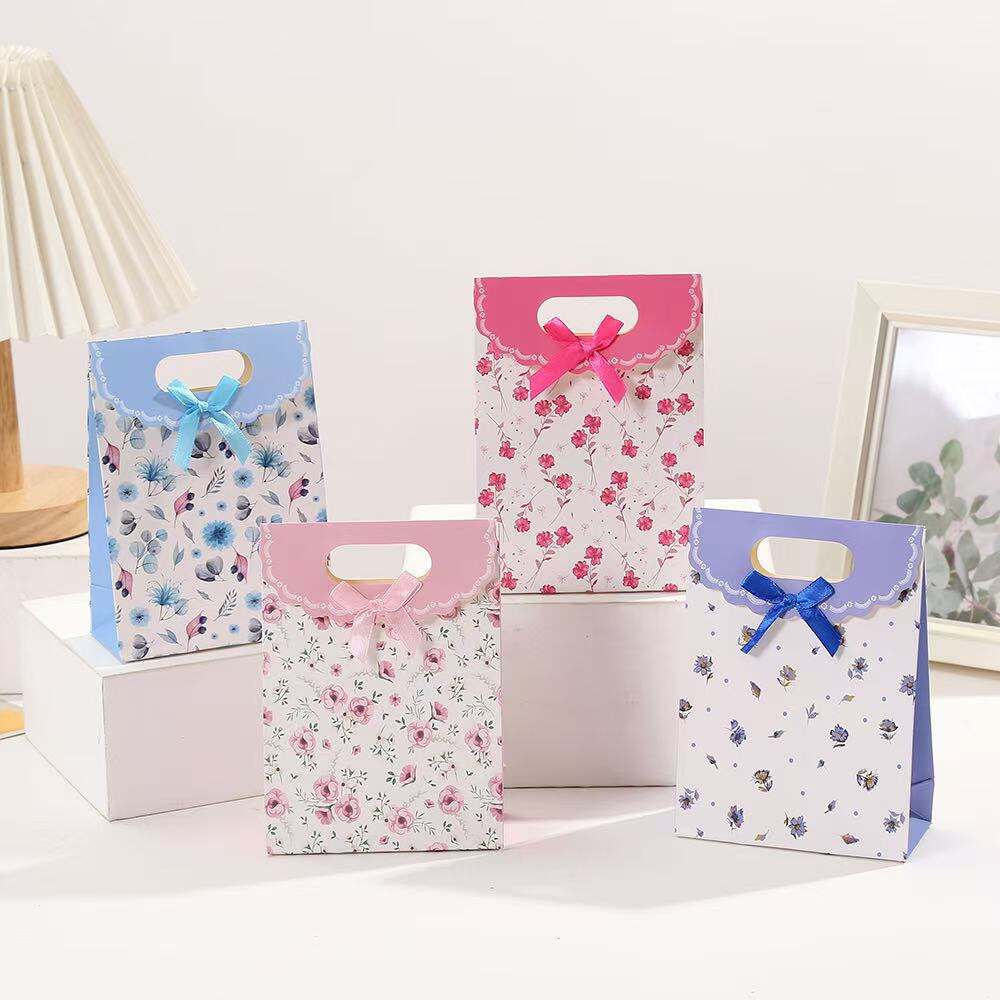
Selecting a baby gift bag for industrial-grade distribution requires careful consideration of multiple factors that balance aesthetic appeal, structural integrity, cost efficiency, and brand positioning. Unlike retail-focused baby gift bag options designed for individual consumer purchases, industrial-grade distribution demands packaging solutions that can withstand bulk handling, maintain consistent quality across large production runs, and deliver a memorable unboxing experience at scale. This specialized procurement process involves evaluating material specifications, customization capabilities, supply chain reliability, and compliance standards that directly impact your brand's market positioning and operational efficiency.
Industrial-grade distribution channels serving maternity hospitals, corporate gifting programs, baby product retailers, and subscription box services face unique challenges when sourcing baby gift bag solutions. The selection process must account for minimum order quantities, lead time requirements, quality assurance protocols, and the ability to scale production while maintaining brand consistency. Understanding how to navigate supplier capabilities, material trade-offs, and customization options becomes critical to ensuring your baby gift bag investment delivers both functional performance and marketing impact across thousands or even millions of units distributed through your channels.
Understanding Industrial-Grade Baby Gift Bag Requirements
Defining Industrial Distribution Standards
Industrial-grade baby gift bag selection begins with understanding the fundamental differences between consumer retail packaging and distribution-scale solutions. Industrial applications require packaging that maintains structural integrity through multiple handling points, from manufacturing facilities through warehousing, transportation, and final presentation. A baby gift bag designed for industrial distribution must demonstrate consistent dimensional accuracy across production batches, ensuring that automated packing systems or manual assembly lines can process units efficiently without size variations that cause operational disruptions.
The material specifications for industrial baby gift bag applications typically demand higher tear resistance, reinforced handle attachment points, and base construction that prevents collapse when filled with typical baby product assortments. Unlike single-use retail bags, industrial distribution often involves pre-packing scenarios where bags remain filled and stored for extended periods before reaching end consumers. This storage duration necessitates materials that resist humidity degradation, maintain color fastness under warehouse lighting conditions, and preserve structural shape without requiring individual protective packaging for each unit.
Volume requirements fundamentally shape industrial baby gift bag selection criteria. Minimum order quantities for industrial-grade production typically start at 5,000 units and commonly reach 50,000 to 100,000 units per order cycle. These volume thresholds enable cost-effective customization, dedicated production runs, and quality consistency that smaller batch orders cannot achieve. Understanding your annual distribution volume, seasonal fluctuations, and inventory carrying capacity becomes essential to selecting a baby gift bag solution that balances unit economics with operational flexibility.
Compliance and Safety Considerations
Baby-focused packaging carries heightened regulatory scrutiny compared to general gift packaging applications. Industrial buyers must verify that their selected baby gift bag meets relevant safety standards, including material composition regulations that prohibit harmful chemicals, heavy metals, or toxic inks that could pose risks if products contact infant items. Many jurisdictions require specific labeling, material disclosure statements, or third-party testing certifications for packaging that will contain baby products, particularly in healthcare distribution channels or international markets.
Material sourcing transparency becomes increasingly important as corporate sustainability commitments and consumer expectations evolve. Industrial baby gift bag procurement should include verification of supplier compliance with environmental standards, ethical manufacturing practices, and material traceability documentation. Forest Stewardship Council certification for paper-based materials, verification of recycled content percentages, and documentation of manufacturing facility labor practices help mitigate supply chain risks while supporting corporate social responsibility objectives that resonate with baby product market demographics.
The durability requirements for a baby gift bag in industrial distribution extend beyond the initial presentation moment. Many end-use scenarios involve recipients reusing quality gift bags for storage, transport to baby showers, or organizational purposes in nursery environments. Selecting materials and construction methods that enable extended use cycles enhances perceived value, reinforces positive brand associations, and demonstrates environmental responsibility through reduced single-use waste. This reusability factor influences material selection toward higher-grade papers, reinforced construction techniques, and timeless design aesthetics that transcend temporary trends.
Material Selection for Durability and Brand Impact
Evaluating Paper Stock Options
The paper stock foundation of your baby gift bag determines both functional performance and tactile brand impression. Industrial-grade applications typically utilize paper weights ranging from 157gsm to 250gsm, with heavier stocks providing superior structural integrity for larger bag dimensions or heavier product loads. The baby gift bag weight selection must balance durability requirements against shipping cost implications, as heavier materials increase both per-unit weight and dimensional shipping calculations for bulk distribution.
Coated versus uncoated paper stocks present distinct trade-offs for baby gift bag applications. Coated papers offer enhanced print reproduction quality, displaying photographic images and gradient designs with superior clarity and color vibrancy. The smooth surface texture of coated stocks conveys premium positioning and protects printed graphics from scuffing during handling. However, coated papers generally resist recycling processes compared to uncoated alternatives and may not accept certain customization techniques like embossing or foil stamping as effectively. Uncoated papers provide natural texture appeal, superior breathability for moisture-sensitive applications, and stronger environmental messaging through visible recycled fiber content.
Specialty paper options expand creative possibilities for differentiated baby gift bag solutions. Textured papers featuring linen, felt, or canvas finishes add tactile dimension that elevates perceived quality without requiring premium pricing. Metallic or pearlescent paper stocks create sophisticated visual effects appropriate for luxury baby product positioning. Kraft paper options deliver authentic, eco-conscious aesthetics that resonate with environmentally aware demographics while offering excellent strength characteristics. Each specialty material choice carries implications for printing methods, customization compatibility, and minimum order quantities that industrial buyers must evaluate against brand positioning objectives.
Handle and Reinforcement Engineering
Handle construction represents a critical failure point in baby gift bag performance, particularly under industrial distribution stress. Rope handles offer superior comfort and load distribution, making them ideal for bags containing multiple baby products or heavier items like diaper packages and feeding equipment. The rope diameter, material composition, and attachment method must withstand repeated lifting, potential overfilling, and the dynamic stresses of transportation. Industrial specifications should define minimum rope diameter standards, attachment reinforcement requirements, and pull-test parameters that ensure consistent performance across production batches.
Ribbon handles provide elegant aesthetics suitable for premium baby gift bag positioning but require careful engineering to achieve adequate load capacity. Grosgrain ribbons offer better durability than satin alternatives, with reinforced stitching at attachment points preventing premature separation. Die-cut handle options integrated directly into the bag material eliminate separate components, reducing assembly complexity and potential failure points. However, die-cut handles limit load capacity and may create sharp edges requiring additional finishing processes to ensure safe handling, particularly important given the baby product context where recipients may have sensitive skin or limited hand mobility during postpartum recovery.
Base reinforcement engineering prevents bottom blowouts and maintains bag shape throughout the distribution cycle. Industrial baby gift bag designs commonly incorporate cardboard base inserts, folded base construction with multiple glue points, or gusset reinforcement that distributes weight across broader surface areas. The base dimensions must accommodate standard baby product assortments without creating instability or requiring custom packing configurations. Testing protocols should simulate real-world loading scenarios, extended storage periods, and typical handling conditions to verify that base construction maintains integrity through the complete distribution chain from your facility to end consumer presentation.
Customization Strategies for Brand Differentiation
Printing Techniques and Quality Control
Offset printing remains the industrial standard for high-volume baby gift bag production, delivering consistent color reproduction, fine detail resolution, and cost efficiency at scale. This printing method excels at reproducing complex graphics, photographic images, and gradient designs across thousands of units with minimal color variation between batches. Industrial buyers should establish Pantone color specifications for brand colors, require press sheet approvals before full production runs, and implement batch sampling protocols that verify color consistency throughout extended production cycles spanning multiple days or weeks.
Digital printing technologies offer advantages for shorter production runs, variable data applications, or rapid prototype development during baby gift bag design phases. While per-unit costs typically exceed offset printing at industrial volumes, digital methods eliminate plate creation costs and setup time, making them economically viable for seasonal designs, regional variations, or test marketing initiatives requiring smaller quantities. The printing method selection should align with your distribution volume, design complexity, customization requirements, and timeline constraints to optimize both cost efficiency and quality outcomes.
Surface finishing techniques transform printed baby gift bag designs from standard packaging into memorable brand touchpoints. Spot UV coating adds dimensional gloss to specific design elements, creating visual contrast and tactile interest without coating entire surfaces. Matte lamination provides sophisticated, understated elegance while offering surface protection against scuffing and moisture. Soft-touch lamination delivers premium tactile sensation that conveys quality through physical interaction. Each finishing option carries cost implications, minimum quantity thresholds, and compatibility considerations with base paper stocks that industrial buyers must evaluate against brand positioning objectives and budget parameters.
Structural Design and Functional Features
The structural design of your baby gift bag influences both practical functionality and brand perception. Standard rectangular formats with gusset sides provide maximum internal volume efficiency and stable standing characteristics suitable for retail display or presentation settings. Euro-tote styles with integrated cardboard bases offer premium positioning and superior structural rigidity but typically command higher per-unit costs. Specialty shapes including scalloped tops, window cutouts, or architectural folding patterns create distinctive visual signatures that differentiate your baby gift bag from standard market offerings while potentially increasing manufacturing complexity and minimum order requirements.
Closure mechanisms extend beyond traditional open-top designs to enhance product security and presentation impact. Magnetic closures create satisfying closure feedback and maintain bag shape during transport, though they add significant cost and may require manual assembly. Ribbon ties provide decorative closure options suitable for premium baby gift bag applications, creating bow embellishments that enhance gift presentation while securing contents. Fold-over flap designs with adhesive strips offer tamper-evident sealing for pre-packed distribution scenarios while maintaining easy opening for end recipients. The closure selection should balance security requirements, assembly complexity, cost implications, and alignment with your distribution model.
Functional interior features transform baby gift bag designs from simple carriers into complete packaging solutions. Interior pockets or dividers organize multiple baby products, preventing shifting during transport and creating organized presentation when recipients open bags. Tissue paper inclusion provides protective cushioning while adding color accent opportunities and premium unboxing experience. Coordinating tag attachments enable personalization, product information display, or promotional messaging without compromising bag design aesthetics. Each functional enhancement requires evaluation of assembly complexity, cost impact, and alignment with your operational capabilities and distribution requirements.
Supplier Evaluation and Quality Assurance
Manufacturing Capability Assessment
Evaluating potential baby gift bag suppliers requires systematic assessment of manufacturing capabilities, quality systems, and operational reliability. Site visits or virtual facility tours provide direct observation of production equipment, quality control processes, material handling systems, and workplace conditions that indicate supplier professionalism and capability. Industrial buyers should verify that suppliers operate modern bag-making machinery capable of consistent dimensional accuracy, automated quality inspection systems that detect defects during production, and climate-controlled storage facilities that preserve material integrity before shipping.
Production capacity verification ensures suppliers can fulfill your volume requirements within required timeframes without compromising quality through rushed manufacturing or resource constraints. Request detailed information about production line quantities, shift operations, and existing customer commitments that might impact your order priority. Suppliers should demonstrate capacity to handle your baseline volume requirements plus reasonable growth projections, seasonal volume spikes, or rush order scenarios without requiring extraordinary accommodation that signals operational limitations. The baby gift bag supplier's client portfolio provides insights into experience with similar applications, industry knowledge, and ability to understand your specific distribution requirements.
Customization capabilities determine how effectively suppliers can translate your brand vision into physical baby gift bag reality. Evaluate the range of available printing methods, finishing options, structural variations, and specialty features within standard pricing and minimum quantity parameters. Suppliers with in-house design teams, digital sampling capabilities, and collaborative development processes offer advantages for brands seeking differentiated packaging solutions. Review sample archives showcasing completed projects, particularly baby gift bag applications or similar demographics, to assess design execution quality, attention to detail, and creative sophistication that aligns with your brand standards.
Quality Standards and Testing Protocols
Establishing comprehensive quality standards prevents costly defects, distribution delays, and brand reputation damage from substandard baby gift bag production. Detailed specifications should define acceptable tolerances for dimensions, color accuracy, material weights, print registration, handle attachment strength, and overall construction quality. These specifications become contractual performance standards that enable objective quality assessment and provide clear rejection criteria for defective production batches. Industrial buyers should require pre-production samples, first article inspections, and in-process quality checks at specified intervals throughout production runs to verify ongoing compliance with established standards.
Physical testing protocols validate that baby gift bag construction meets functional performance requirements under realistic use conditions. Load testing verifies handle strength and base integrity by filling bags with weight equivalent to intended product assortments, then subjecting them to lifting cycles, drop tests, and prolonged storage periods. Color fastness testing exposes printed samples to light exposure, humidity conditions, and surface abrasion to verify that graphics maintain appearance quality throughout expected product lifecycles. Dimensional stability testing measures size consistency across production batches, ensuring compatibility with automated packing systems or standardized product assortments.
Third-party inspection services provide independent quality verification, particularly valuable for international sourcing relationships or high-volume baby gift bag procurement where quality failures carry significant financial consequences. Professional inspection companies conduct on-site assessments during production, verify compliance with specifications, document defect rates, and provide detailed reporting with photographic evidence. This independent oversight reduces quality risk, provides leverage for addressing supplier performance issues, and demonstrates due diligence in supply chain management. The inspection service cost represents minor investment compared to potential losses from accepting defective production or experiencing customer complaints from quality failures.
Cost Optimization and Procurement Strategy
Total Cost Analysis Framework
Effective baby gift bag procurement extends beyond simple per-unit pricing to encompass total landed cost including shipping, duties, quality inspection, inventory carrying costs, and potential waste from defects or design obsolescence. International sourcing often delivers lower per-unit manufacturing costs but introduces shipping expenses, extended lead times, currency exchange risks, and communication complexities that impact total cost of ownership. Domestic suppliers typically command higher unit prices but offer faster turnaround, simplified logistics, easier quality oversight, and reduced supply chain risk that may justify premium pricing for time-sensitive applications or quality-critical programs.
Volume commitment strategies significantly impact baby gift bag unit economics through economies of scale in materials procurement, production efficiency, and customization setup cost amortization. Annual volume commitments with scheduled release orders balance cost optimization through bulk pricing against inventory risk and design flexibility limitations. Understanding your true annual baby gift bag consumption, seasonal distribution patterns, and reasonable growth projections enables negotiation of volume pricing tiers while maintaining operational flexibility through staggered delivery schedules. Suppliers often offer significant discounts at volume thresholds of 50,000, 100,000, and 250,000 units annually, making accurate demand forecasting critical to procurement optimization.
Design standardization versus customization decisions profoundly impact both unit costs and operational complexity. Fully custom baby gift bag designs with unique dimensions, specialty materials, and complex printing command premium pricing and higher minimum quantities but deliver maximum brand differentiation and design control. Semi-custom approaches utilizing standard bag sizes with custom printing on stock materials reduce costs and minimum quantities while maintaining substantial brand identity expression. Stock bag purchases with applied labels or tags offer lowest costs and minimum quantities but sacrifice design integration and premium positioning. The optimal approach balances brand objectives, budget constraints, volume requirements, and competitive differentiation priorities specific to your distribution channels.
Risk Management and Supply Continuity
Supply chain resilience planning protects against disruptions that could interrupt baby gift bag availability and impact distribution operations. Dual-sourcing strategies maintain relationships with multiple qualified suppliers, enabling rapid production shifts if primary suppliers experience capacity constraints, quality failures, or business disruptions. While maintaining multiple supplier relationships adds management complexity, the insurance against supply interruptions justifies the investment for business-critical packaging applications. Secondary suppliers should maintain current specifications, approved samples, and periodic small orders that preserve relationship viability and verify ongoing capability.
Inventory strategy balances carrying costs against stockout risks and supply lead time realities. Safety stock calculations should account for supplier lead times, demand variability, seasonal patterns, and acceptable service level targets for baby gift bag availability. Just-in-time inventory approaches minimize carrying costs but increase vulnerability to demand spikes or supply delays. Buffer inventory strategies consume working capital and warehouse space but provide operational security and flexibility to accommodate unexpected opportunities or challenges. The optimal inventory position depends on your demand predictability, storage capacity, capital availability, and risk tolerance for potential distribution interruptions.
Long-term supplier relationships generate value beyond transactional pricing through accumulated knowledge of your requirements, proactive problem-solving, priority treatment during capacity constraints, and collaborative innovation on baby gift bag improvements. Investing in supplier partnerships through clear communication, reasonable payment terms, forecast sharing, and mutual respect creates competitive advantages that pure price-based procurement cannot achieve. Suppliers who understand your business objectives, seasonal patterns, and growth trajectory become strategic partners capable of supporting your success through responsive service, quality consistency, and creative solutions that advance your brand positioning in baby product distribution markets.
FAQ
What minimum order quantity should I expect for industrial-grade baby gift bags?
Industrial-grade baby gift bag production typically requires minimum order quantities starting at 5,000 units for semi-custom designs utilizing standard bag structures with custom printing. Fully custom baby gift bag designs with unique dimensions, specialty materials, or complex finishing techniques commonly require 10,000 to 25,000 unit minimums to justify tooling costs and production setup. These volume thresholds enable cost-effective customization and quality consistency that smaller orders cannot achieve. Some suppliers offer lower minimums for standard stock bags with simple custom printing, though unit costs increase significantly below industrial volume thresholds. Planning your procurement around these minimum quantities requires accurate demand forecasting and willingness to carry inventory that balances unit economics against working capital investment.
How long does industrial baby gift bag production typically take from order to delivery?
Production lead times for industrial baby gift bag orders generally range from four to eight weeks depending on customization complexity, order volume, supplier capacity, and shipping method. The timeline includes design finalization and approval, material procurement, production scheduling, manufacturing, quality inspection, and transportation to your facility. Custom designs requiring new tooling, specialty materials, or complex finishing techniques may extend timelines to ten or twelve weeks. Domestic suppliers typically offer shorter lead times than international sources, though international manufacturing often provides cost advantages that offset longer timelines for non-urgent requirements. Rush production services are sometimes available at premium pricing for urgent needs, though quality risks increase when normal production processes are compressed. Effective procurement planning accounts for these lead time realities when scheduling promotional campaigns, seasonal distribution programs, or product launch initiatives requiring baby gift bag availability.
What factors most significantly impact baby gift bag pricing in industrial quantities?
Order volume represents the single largest pricing determinant for industrial baby gift bag procurement, with per-unit costs decreasing substantially as quantities increase through economies of scale in material procurement, production efficiency, and fixed cost amortization. Material selection significantly impacts pricing, with specialty papers, heavy stock weights, and premium finishes commanding higher costs than standard materials. Customization complexity including multi-color printing, specialty inks, surface finishing techniques, and structural variations adds cost through increased production time and material waste. Handle types influence pricing, with rope handles and ribbon treatments costing more than die-cut alternatives. Supplier location affects total landed cost through shipping expenses, import duties, and logistical complexity. Design change frequency impacts long-term costs through repeated tooling expenses and inventory obsolescence. Understanding these cost drivers enables strategic decision-making that optimizes baby gift bag investment while achieving brand objectives within budget constraints.
How can I verify that baby gift bag suppliers meet safety and quality standards for baby products?
Verifying baby gift bag supplier compliance begins with requesting material safety documentation including test reports confirming absence of harmful chemicals, heavy metals, and toxic substances that could pose risks to baby products or users. Reputable suppliers readily provide third-party testing certifications from recognized laboratories verifying material safety compliance with relevant regulations in your distribution markets. Request documentation of manufacturing facility certifications including ISO quality management systems, environmental compliance, and social responsibility audits that demonstrate professional operations. Conduct supplier facility visits or arrange independent inspections to directly observe manufacturing processes, quality control systems, and material handling practices. Review supplier client references, particularly customers with similar baby product applications, to assess reputation and performance history. Implement incoming quality inspection protocols that verify each shipment meets specifications before accepting delivery and distributing baby gift bags through your channels. This multi-layered verification approach mitigates risks while ensuring packaging quality worthy of baby product association.
Table of Contents
- Understanding Industrial-Grade Baby Gift Bag Requirements
- Material Selection for Durability and Brand Impact
- Customization Strategies for Brand Differentiation
- Supplier Evaluation and Quality Assurance
- Cost Optimization and Procurement Strategy
-
FAQ
- What minimum order quantity should I expect for industrial-grade baby gift bags?
- How long does industrial baby gift bag production typically take from order to delivery?
- What factors most significantly impact baby gift bag pricing in industrial quantities?
- How can I verify that baby gift bag suppliers meet safety and quality standards for baby products?